Friday, May 21, 2010

Today in Gay History

Happy 85th Birthday May 21st
Frank Kameny (b. 1925)

Gay Rights Founding Father


Frank Kameny is one of the founding fathers of the American gay rights movement. He helped radicalize the homophile movement, preparing the way for the mass movement for equality initiated by the Stonewall Rebellion of 1969.

He was born Franklin Edward Kameny on May 21, 1925, into a New York middle-class Jewish family. A prodigy who had taught himself to read by the age of four, he entered Queens College at the age of 15 to study physics. He interrupted his education, however, to serve in the armed forces during World War II. After the war he returned to his studies, and in 1956 he received a Ph.D. in astronomy from Harvard University.

Upon graduation Kameny moved to Washington, D. C. to join the faculty of Georgetown University. In July 1957, after one year of teaching, Kameny obtained a civil service job as an astronomer with the United States Army Map Service and began what he hoped would be a fulfilling scientific career. However, events over the next couple of years changed the direction of his life forever.

Late one night in 1957, Kameny was arrested on a morals charge in Lafayette Park, a popular gay cruising area in Washington, D. C. He was released, and nothing immediately came of the incident. It was not long afterward, however, that an investigator from the Civil Service Commission came to question him about rumors that he was a homosexual.

That fall, after serving in his job for only a few months, Kameny was fired from the Map Service, and early the next year he learned that he had been barred from all future employment in the federal government. A victim of the McCarthy-era regulations that branded homosexuals as potential traitors and unfit for government employment, Kameny found his career in ruins.

This experience drove Kameny to militant activism. "My dismissal amounted to a declaration of war against me by the government," Kameny later said, "and I tend not to lose my wars." Kameny attempted to sue the government to get his job back, a lengthy process that went through several appeals. However, all his legal efforts came to naught, including filing his own petition to the United States Supreme Court, which was denied in 1961.

Having failed to achieve his goal as an individual, he resolved that it was time to organize and work within a group. Kameny and his friend Jack Nichols established the Mattachine Society of Washington, D. C. in August 1961. Although the Washington group took its name from the Los Angeles-based homophile organization, the two were not affiliated.

The Mattachine Society of Washington, D. C.'s first official meeting was held on November 15, 1961 and drew about a dozen men and women. Kameny was elected as the group's first president. In opposition to many gay leaders at the time, Kameny embraced direct action and sought contact with public officials rather than hiding from them. Kameny believed that gay people should fight a "down-to-earth, grass-roots, sometimes tooth-and-nail battle" against discrimination.

Under Kameny's leadership, the Mattachine Society of Washington, D. C. charged to the forefront of the emerging homophile movement, in many ways anticipating the militancy that was to be unleashed among gay men and lesbians generally by the Stonewall Rebellion of 1969.

. . .Kameny's group focused its efforts on removing discrimination on the basis of sexual orientation from civil service employment, as well as on granting gay men and lesbians security clearances and qualifying them for service in the military.

In April 1965, the group organized the first gay demonstration at the White House. A dozen or so gay men and lesbians, including Kameny and Barbara Gittings, dressed in business attire, carried signs reading "First Class Treatment for Homosexuals" and "Civil Service Commission is Un-American."

A few months after that demonstration, the U. S. Court of Appeals issued a ground-breaking decision. The court held that rejection of an application for federal employment on the grounds of "homosexual conduct" was "too vague." The Civil Service Commission, the court ruled, failed to state "why [homosexuality] related to occupational competence or fitness."

After a number of similar court decisions were handed down over the next ten years, the Civil Service Commission finally amended its anti-gay policy in 1975.

In addition to battling discrimination in civil service employment, Kameny also sought to challenge the negative images of homosexuals prevalent in the 1960s. Toward that goal, he coined the slogan "Gay is Good." The slogan was later adopted by the 1968 North American Conference of Homophile Organizations (NACHO).

In 1971 Kameny participated in the annual meeting of the American Psychiatric Association, where he accused psychiatrists of victimizing gay men and women with their unscientific theories of homosexuality. He urged the APA to remove homosexuality from its list of psychiatric illnesses, which the organization eventually did in 1973.

In 1971, Kameny became the first openly gay person to run for congress. Competing for D. C.'s non-voting seat in the House of Representatives, Kameny came in fourth among six candidates. He used the campaign to call attention to the inequities experienced by homosexuals in a country in which the government "wages a relentless war against us."

Kameny is also a cofounder of the National Gay Task Force and the Gay Rights National Lobby. In 1975, he was appointed a Commissioner of the D. C. Commission on Human Rights, becoming the first openly gay municipal appointee. He also personally drafted the bill that repealed D. C.'s sodomy law, which was finally enacted in 1993.

Dr. Kameny's archives and papers documenting his life and leadership were acquired by the Library of Congress in 2006.

In February 2009, Kameny’s home in Washington was designated as a D.C. Historic Landmark by the District of Columbia’s Historic Preservation Review Board.

|||||||||||||||||||||||||||||||

Friday, April 30, 2010

Today in Gay History


April 30, 1997


Ellen Morgan,


portrayed by


Ellen DeGeneres,


came out on her


ABC television


series "Ellen."


And the world has not been the same since. Thank you, Ellen!


||||||||||||||||||||||||||||||||||||||||||||||||||


Thursday, April 29, 2010

Today in Gay History


On April 29, 1997

The State of Hawaii created

a "domestic partners registry."

This was in response to the May 1993 ruling of Hawaii's Supreme Court that the state must show a compelling reason to ban same-sex marriage and orders a lower court to hear a case seeking the right of same-sex couples to marry. By November 1998, the voters of Hawaii approved a state constitutional amendment reserving the right to define marriage to the Legislature, barring further judicial action.

|||||||||||||||||||||||||||||||||||||||||||

Sunday, April 25, 2010

Today in Gay History


Happy 726th Birthday

Edward II, King of England
(April 25, 1284-1327)


"Historians largely regard the reign of Edward II as one of the most ineffectual of the Middle Ages. The nobility deemed his intimacy with Piers Gaveston (d. 1312) inappropriate and excessive; and Edward's insistent loyalty to his closest friend only further alienated them, ultimately contributing to his own fall from power.

Edward was born on April 25, 1284 at Caernarvon Castle in Wales. Although he was the fourth son of Edward I and his first wife Eleanor of Castile, he was the only son to survive infancy and become heir to the throne. . . .

His pursuits were not those typically approved of in kings at this time. Edward preferred such activities as swimming, boating, thatching roofs, and arranging theatrical and musical events. . . . In addition, he formed intense friendships with men whom his father felt wielded too much influence over the prince. Piers Gaveston, a knight from Gascon, was the first and most important of Edward's favorites.

Gaveston and Edward may have become intimate friends during the Scottish campaign led by Edward I in 1300. The king became critical of this friendship, and exiled Gaveston from England. " Learn more about Edward @ g l b t q

Tuesday, April 20, 2010

Today in Gay History


April 21, 2005

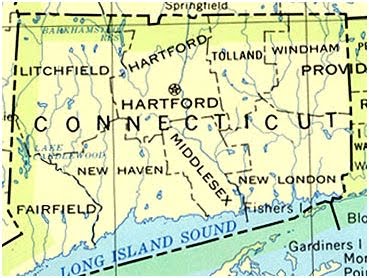
Connecticut Governor signs Civil Unions law, becoming only the second state to do so legislatively without being compelled by the courts. While affirming that marriage was only to be between one man and one woman, the key provisions of the new Civil Unions law were:


Sec. 2. (NEW) (Effective October 1, 2005) A person is eligible to enter into a civil union if such person is:

(1) Not a party to another civil union or a marriage;

(2) Of the same sex as the other party to the civil union;

(3) Except as provided in section 10 of this act, at least eighteen years of age; and

(4) Not prohibited from entering into a civil union pursuant to section 3 of this act.

Sec. 14. (NEW) (Effective October 1, 2005) Parties to a civil union shall have all the same benefits, protections and responsibilities under law, whether derived from the general statutes, administrative regulations or court rules, policy, common law or any other source of civil law, as are granted to spouses in a marriage, which is defined as the union of one man and one woman.

Sec. 15. (NEW) (Effective October 1, 2005) Wherever in the general statutes the terms "spouse", "family", "immediate family", "dependent", "next of kin" or any other term that denotes the spousal relationship are used or defined, a party to a civil union shall be included in such use or definition, and wherever in the general statutes, except sections 7-45 and 17b-137a of the general statutes, as amended by this act, subdivision (4) of section 45a-727a, sections 46b-20 to 46b-34, inclusive, section 46b-150d of the general statutes, as amended by this act, and section 14 of this act, the term "marriage" is used or defined, a civil union shall be included in such use or definition.

Meanwhile, a year or so later, the Supreme Court of Connecticut ruled that legal Marriage constitutionally could not be denied to same sex couples. The separate establishment of mere Civil Unions did not meet constitutional muster.

On April 23, 2009 lawmakers of Connecticut both in the House (vote 100-44) and in the Senate (vote 28-7) agreed to repeal all the old marriage laws and fully replace them with genderless quotes and all references to marriage will be fully gender -neutral. Governor Jodi Rell, a Republican, signed the law. On October 1, 2010, civil unions will cease to be provided and existing civil unions will be automatically converted to marriages. Until then, existing civil unions will be kept and couples may "upgrade" to marriage voluntarily. Same-sex marriages, civil unions and broad domestic partnerships from other jurisdictions will be legally treated as marriages in Connecticut.

|||||||||||||||||||||||||||||||||||||


Sunday, April 4, 2010

We Need a New Covenant

|||||||||||||||||||||||||||||||||||||||||||||||||

Thursday, April 1, 2010

Happy All Fools Day

Les Poissons d' Avril

Unlike most of the other nonfoolish holidays, the history of April Fool's Day, sometimes called All Fool's Day, is not totally clear. There really wasn't a "first April Fool's Day" that can be pinpointed on the calendar. Some believe it sort of evolved simultaneously in several cultures at the same time, from celebrations involving the first day of spring.

The closest point in time that can be identified as the beginning of this tradition was in 1582, in France. Prior to that year, the new year was celebrated for eight days, beginning on March 25. The celebration culminated on April 1. With the reform of the calendar under Charles IX, the Gregorian Calendar was introduced, and New Year's Day was moved to January 1. However, communications being what they were in the days when news traveled by foot, many people did not receive the news for several years. Others, the more obstinate crowd, refused to accept the new calendar and continued to celebrate the new year on April 1. These backward folk were labeled as "fools" by the general populace. They were subject to some ridicule, and were often sent on "fools errands" or were made the butt of other practical jokes

.

The butts of these pranks became known as "poissons d'avril" or "April fish" because a young naive fish is easily caught. In addition, one common practice was to hook a paper fish on the back of someone as a joke. It's still the favorite April Fool trick of most French and Québecois children to stealthily attach a paper fish to the back of a copain to this day.

This harassment evolved, over time, into a tradition of prank-playing on the first day of April. The tradition eventually spread to England and Scotland in the eighteenth century. It was later introduced to the American colonies of both the English and French. April Fool's Day thus developed into an international fun fest, so to speak, with different nationalities specializing in their own brand of humor at the expense of their friends and families.

In Scotland, for example, April Fool's Day is actually celebrated for two days. The second day is devoted to pranks involving the posterior region of the body. It is called Taily Day. The origin of the "kick me" sign can be traced to this observance.

Mexico's counterpart of April Fool's Day is actually observed on December 28. Originally, the day was a sad remembrance of the slaughter of the innocent children by King Herod. It eventually evolved into a lighter commemoration involving pranks and trickery.

Pranks performed on April Fool's Day range from the simple, (such as saying, "Your shoe's untied!), to the elaborate. Setting a roommate's alarm clock back an hour is a common gag. Whatever the prank, the trickster usually ends it by yelling to his victim, "April Fool!"

April Fool's Day is a "for-fun-only" observance. Nobody is expected to buy gifts or to take their "significant other" out to eat in a fancy restaurant. Nobody gets off work or school. It's simply a fun little holiday, but a holiday on which one must remain forever vigilant, for he may be the next April Fool!

||||||||||||||||||||||||||||||||||||||||||

Wednesday, March 31, 2010

Today in Gay History


Happy 70th Birthday

March 31, 1940


Congressman Barney Frank

Turns '70' today!

United States congressman Barney Frank is known for his intelligence, his quick and acerbic wit, and his spirited defense of his social and political beliefs. He has been a leader not only in the cause of gay and lesbian rights, but also on issues including fair housing, consumer rights, banking, and immigration.

Frank was born on March 31, 1940 in Bayonne, New Jersey, where his father owned a truck stop. As a youngster Frank developed an interest in politics. He did not, however, foresee a career in government for himself because he observed in politics a dismaying amount of corruption and an inhospitable attitude toward Jews. He had, moreover, realized at the age of thirteen that he was gay, which also seemed an obstacle to a political career.

Frank first ran for the United States House of Representatives in 1980, when the incumbent, Father Robert Drinan, retired. Drinan endorsed Frank to succeed him, but Boston's Humberto Cardinal Medeiros tried to mobilize Catholics to vote against him because of his pro-choice stance. With narrow victories in both the primary and general elections, Frank became the Representative of the Fourth District of Massachusetts and began his career on the national stage.

The liberal freshman congressman zealously defended programs that protected low-income people, the elderly, and other groups at risk, and he was also a vigorous opponent of initiatives by the Reagan administration to give tax breaks to large corporations, especially those in the oil industry, at the expense of the general populace. One commentator noted that Frank showed "a combination of humor and conviction that left even ideological opponents paying him grudging respect."
Although always an advocate for gay and lesbian rights, Frank was closeted at the beginning of his political career. Fearing that disclosing his sexual orientation would jeopardize his chances for election, Frank "made a conscious choice for a political career over a personal life." Gradually, however, he came out to various friends and colleagues, but it was not until 1987 that he commented publicly, when questioned by a reporter from the Boston Globe. The response of Frank's constituents was overwhelmingly favorable; letters of support outnumbered those critical of him by a margin of six to one.

Frank's record on gay and lesbian concerns is second to none, but he is far from a one-issue legislator. He has supported civil rights, gun control, fair housing, reproductive rights, and the medical use of marijuana. He favors a balanced approach toward environmental issues, opposing oil exploration in the Arctic National Wildlife Refuge but also arguing against restrictions on the fishing industry that "are too rigid and reflect inaccurate science."

In 2003 Frank became the Ranking Member of the House Financial Services Committee, whose oversight includes issues of banking, insurance, real estate, consumer rights, and financial privacy laws. He has been Chair of that powerful committee since the Democrats regained control of Congress in 2006.

Frank has raised the profile of gays in government by attending White House dinners and other official functions with his partner. Herbert Moses, Frank's companion for over a decade, was the first partner of a gay Representative to be granted spousal access privileges to the Capitol. Frank and Moses parted amicably in 1998, about the same time Frank co-founded the National Stonewall Democrats. For severa years Frank attended events at the White House with his then partner, Sergio Pombo.

A true old school liberal, he is equally beloved by his constituents as by Hill staffers, who named him the "most eloquent," "brainiest," and "funniest" Member of the House in both 2004 and 2006. Frank is sixty-nine today. His current partner, Jim Ready, is forty year-old surfer who runs an awning company in Maine.

Frank is known for his intelligence, integrity, and work ethic. Called a "political theorist and pit bull at the same time" and "one of the most colorful and quotable figures in Congress" because of his quick and often biting wit and his rapid-fire style of speech, the congressman is a force to be reckoned with in debate and is also an engaging public speaker.

Frank calls political engagement and participation the most effective course for glbtq people. "Marches and demonstrations may be fun, but they don't affect politicians," he stated. Those who wish to bring about change should, he said, "vote and let [their] elected officials know [they]'re there."

||||||||||||||||||||||||||||||||||||||||||||||||||

Friday, March 26, 2010

Today in Gay History


March 26, 1997

The White House


The first ever official government meeting of people brought together to


discuss gay and lesbian rights is held at the White House;


Bill Clinton is president.


|||||||||||||||||||||||||||||||||||||||||||||||||


Wednesday, March 24, 2010

Today in Gay History

March 24, 1987

ACT UP demonstrates

for first time

On this day in Gay History, ACT UP staged its first major demonstration demanding the establishment acknowledge the AIDS crisis and do something about it. On March 24, 1987, 250 ACT UP members demonstrated at Wall Street and Broadway to demand greater access to experimental AIDS drugs and for a coordinated national policy to fight the disease. An Op/Ed article by Larry Kramer published in the NY Times the previous day described some of the issues ACT UP was concerned with. Seventeen ACT UP members were arrested during this street theatre form of civil disobedience.


This notice had been posted all over the GLBT neighborhoods of New York:

NO MORE BUSINESS AS USUAL!

Come to Wall Street in front of Trinity Church
at 7AM Tuesday March 24 for a

MASSIVE AIDS
DEMONSTRA
TION

To demand the following

1. Immediate release by the Federal Food & Drug Administration of drugs that might help save our lives.

These drugs include: Ribavirin (ICN Pharmaceuticals); Ampligen (HMR Research Co.); Glucan (Tulane University School of Medicine); DTC (Merieux); DDC (Hoffman-LaRoche); AS 101 (National Patent Development Corp.); MTP-PE (Ciba-Geigy); AL 721 (Praxis Pharmaceuticals).

2. Immediate abolishment of cruel double-blind studies wherein some get the new drugs and some don't.

3. Immediate release of these drugs to everyone with AIDS or ARC.

4. Immediate availability of these drugs at affordable prices. Curb your greed!

5. Immediate massive public education to stop the spread of AIDS.

6. Immediate policy to prohibit discrimination in AIDS treatment, insurance, employment, housing.

7. Immediate establishment of a coordinated, comprehensive, and compassionate national policy on AIDS.

President Reagan, nobody is in charge!

AIDS IS THE BIGGEST KILLER IN NEW YORK CITY
OF YOUNG MEN AND WOMEN.

Tell your friends. Spread the word. Come protest together.
7 AM ... March 24 ... You must be on time!

AIDS IS EVERYBODY'S BUSINESS NOW.

The AIDS Network is an ad hoc and broad-based community of AIDS-related organizations and individuals.


THE NEXT YEAR, on March 24, 1988, ACT UP

returned to Wall Street for a larger demonstration in which over 100 people were arrested.

This activism, modeled on Ghandi and MLK’s Soulforce principles, did much to direct much needed popular and government attention, and eventually action to making HIV treatments more widely available and earlier.